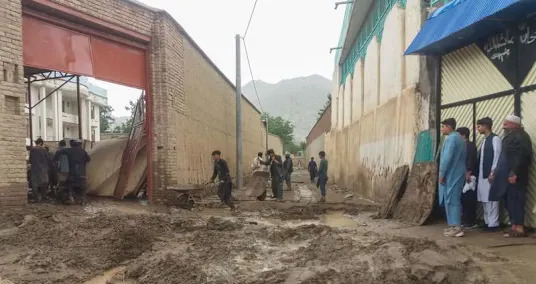
At least 61 people have been killed and 116 injured across Afghanistan since March 26 due to heavy rainfall, floods, landslides and lightning strikes, the Afghan government said on Saturday.
At least four people were still missing after floods affected thousands of families and damaged 2,448 houses, Afghan government spokesman Zabihullah Mujahid said in a post on X.
In addition, thousands of hectares of cropland was also destroyed, posing serious risks to rural communities who rely on agriculture for their livelihoods.
Deadly flooding has struck Afghanistan repeatedly in recent years, causing significant loss of life, injuries and widespread damage to homes, infrastructure and agricultural land.
Extreme weather events such as flash floods and droughts are increasing in Afghanistan, which experts link to the climate crisis.
Despite having a negligible carbon footprint, the country ranks among the most climate-affected nations and remains ill-prepared to cope after decades of conflict, poor infrastructure and a struggling economy, compounded by recent earthquakes and severe flooding.
LATEST POSTS
- 1
 Top Music and Dance Celebration: Which One Gets You Going?
- 2The Developing Nearby Food Development and Its Advantages
- 3Winter storms blanket the East, while the U.S. West is wondering: Where’s the snow?
- 4One ant for $220: the new frontier of wildlife trafficking
- 5Study reveals how fast weight returns after ending GLP-1 drugs




- Iranian strikes on Israel injure 11 and set chemical plant ablaze
- The beauty advent calendar boom is here. Sephora kids are all in.
- EU chief urges Iran to free imprisoned protesters, lift internet ban
- 6 Exercises to Anticipate in 2024
- Understanding Preschool Projects: An Extensive Aide
- Supportive Tips On Home loans For First-Time Home Purchasers
- Tatiana Schlossberg, a granddaughter of JFK, is dead at 35 after cancer diagnosis
- The hunt for dark matter: a trivia quiz
- Polls open in tense Uganda election amid widespread delays