Rape and sexual violence remain "part of everyday life" in areas of Sudan even when fighting in the country's civil war has moved elsewhere, according to a new report by medical charity Médecins Sans Frontières (MSF).
Calling rape a "defining feature" of the conflict, it says sexual assault is overwhelmingly carried out by armed men and is often accompanied by acts of brutality and humiliation.
But MSF says rape persists as an "insidious" part of life for communities in the western region of Darfur that are no longer on the front line.
The report is the most comprehensive account yet on sexual violence in Sudan's nearly three-year war.
Warning: This article contains details of sexual violence that some people may find distressing
It is based on testimonies from 3,396 victims who sought treatment in MSF-supported facilities across North and South Darfur between January 2024 and November 2025.
The warring parties - Sudan's army and the paramilitary Rapid Support Forces (RSF) - are both accused of sexual violence. But Darfur is the stronghold of the RSF and the vast majority of perpetrators identified by survivors were their fighters.
Many of the cases in the report took place in the conflict hotspot of North Darfur last year, following the RSF takeovers of the displaced persons camps of Zamzam and Abu Shouk, and of the city of el-Fasher in October, which MSF calls "one of the most shocking iterations, unfolding the most unimaginable brutality".
The charity says more than 90% of victims it treated were assaulted while travelling from these areas to safety in the town of Tawila.
The attacks often involved multiple rapists and included other forms of extreme violence and intimidation such as beatings or the murder of relatives.
"They took us to an open area," said one woman quoted in the report.
"The first man raped me twice, the second once, the third four times and the fourth once," she said.
"Apart from the rapes, they beat us with sticks and pointed guns at my head. Another girl who was 15… was raped by three men. We were raped throughout the night."
Another survivor said "two of the women in our group were raped by RSF militia in front of us. It was four to five men doing it together. One girl was 22 years old and she died there."
The report reinforces numerous accounts of an ethnic dimension to the attacks, saying non-Arab communities such as the Zaghawa, Massalit and Fur were "systematically targeted" in these atrocities.
The RSF leadership has admitted "individual violations" were committed during the takeover of el-Fasher but says these are being investigated and the scale of atrocities was exaggerated.
The persistence of ethnic targeting is rooted in Darfur's long history of conflict, as is rape, says the report.
It notes that sexual violence does not subside after front lines shift, sustained by a heavily militarised environment with entrenched gender inequalities that has fostered a sense of impunity among perpetrators.
As such rape has become part of everyday life in South Darfur, which is far from active conflict zones, says MSF.
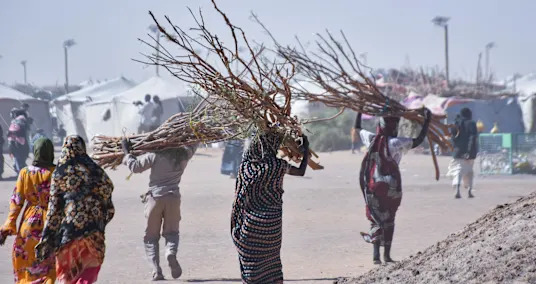
According to the report, more than 1,300 survivors, 56% of those who sought help at MSF clinics in the state, were raped while carrying out activities such as collecting firewood or water, working in fields or travelling to farms.
"Every day, when people go to the market, there are four or five cases of rape," says a 40-year-old woman quoted in the report.
"When we go to the farm, this happens. Men, they will cover their heads, and they will rape women… There is no way to stop the rapes. The only way is to try to stay home."
"We were three people – and also my aunt," says another woman in her 20s.
"And there were three soldiers. They took each of us to different places. All of us... my sister, they raped her and now she's pregnant... I feel a deep pain," she said.
"I feel pain... This is happening to girls, every day – every day, in our area. They are always raping girls."
In South Darfur, 68% of victims said they were assaulted by armed men, although they also identified other perpetrators including civilians, criminal groups and intimate partners.
One in five of the survivors of sexual assault in this state was under the age of 18, 41 of whom were under the age of five.
MSF says its data represents only a fraction of the true scale of the abuse, given significant barriers to care such as ongoing insecurity and displacement, intense stigma and the absence of functioning protection services.
The medical charity says the humanitarian system has failed to respond to the needs of survivors, and calls for accountability and action.
More about the Sudan war from the BBC:

Go to BBCAfrica.com for more news from the African continent.
Follow us on Twitter @BBCAfrica, on Facebook at BBC Africa or on Instagram at bbcafrica
BBC Africa podcasts
LATEST POSTS
- 1
 Find Your Ideal Tea: Six Particular Assortments
- 26 Pet Sitting Administrations for Your Cherished Pets
- 3What's going on with Katseye? The Manon Bannerman hiatus drama, explained.
- 4Figure out how to Arrange a Fair Settlement with the Assistance of a Fender bender Legal counselor
- 5Bombardier Global 8000 Enters Service





- 23 Most Amusing Messages At any point Sent Among Kids and Their Folks
- 'War is not over': Detailed diagrams of prisons found in cells of Oct. 7 terrorists
- The most effective method to Connect Successfully with Teachers in a Web based Setting
- Tens of thousands protest as far-right AfD forms new youth group
- Hamas delegation meets Egypt’s spy chief amid mutual ceasefire violation claims
- How to track NASA’s Artemis II and Orion’s journey to the moon
- Savvy Watches: Which One Is Appropriate for You?
- Change Your Physical make-up: Compelling Activities for Muscle Building
- US FDA investigates Takeda's blood disorder drug after pediatric death